By: James Vance – SeaPRwire – The race to build the world’s best AI image model has become crowded, predictable and, in many ways, disconnected from how creative teams actually work. Nearly every major release promises sharper images, stronger aesthetics or higher benchmark scores. Those improvements matter, yet they rarely solve the daily frustrations inside brand marketing departments. Designers do not lose time because an image lacks visual quality. They lose time because AI struggles with typography, brand consistency, editing workflows and production requirements. Riverflow 2.5 Pro enters the market by attacking those operational bottlenecks rather than chasing visual novelty alone. That positioning may prove more consequential than another incremental leap in image realism.
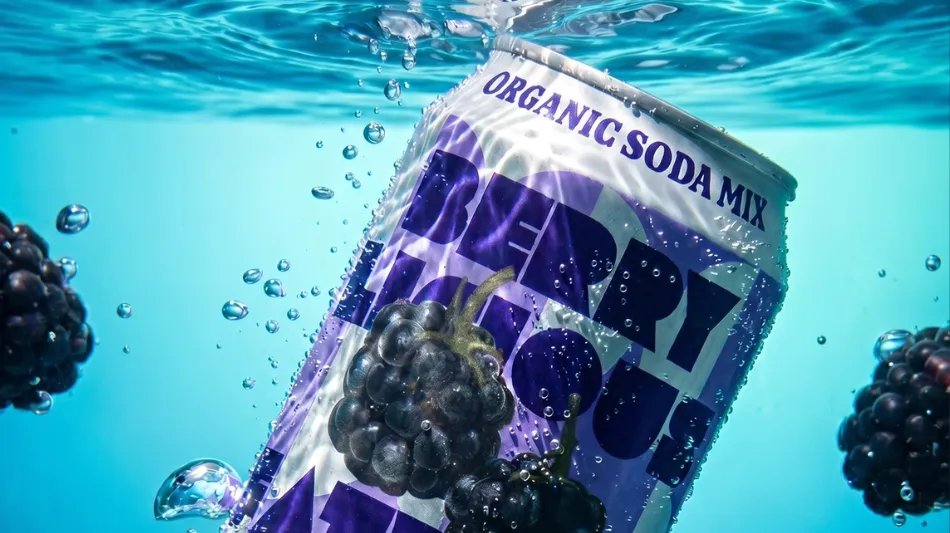
The official announcement supports that strategy with several concrete milestones. Earlier this month, Sourceful introduced Riverflow 2.5 Pro, the latest version of its AI image generation platform built for brand creative production. Shortly after launch, the model received independent recognition from Design Arena, a user-voted global benchmark for AI image systems operated by The Intelligence Company. Riverflow 2.5 Pro ranked first across all three evaluated creative categories, achieving an Elo score of 1408 for Image Generation, 1469 for Graphic Design and 1377 for Image Editing. According to the announcement, this is the first model to lead every category simultaneously. The model is already available through the Riverflow platform and via API integrations with OpenRouter, Runware and Replicate.
Benchmark leadership, however, is only part of the story. Riverflow’s product philosophy departs from the prevailing direction taken by many image generation systems. Most consumer-oriented models optimize for broad public preference, producing attractive visuals that gradually converge toward similar aesthetics. Riverflow argues that commercial design requires a different definition of quality. A campaign image intended for paid social advertising serves a different purpose than a retail package or a homepage hero banner. Riverflow 2.5 Pro introduces a custom scoring framework that allows organizations to encode their own creative priorities directly into the generation process. Rather than relying solely on the model’s internal judgment, teams can instruct the system to evaluate each iteration according to business-specific objectives. Using identical prompts during controlled testing, the company reported scores of 92.3% for packaging approval readiness, 90.4% for paid social conversion suitability and 89.2% for homepage hero optimization. Whether these numbers translate consistently across every production environment will ultimately depend on real-world deployment, but the concept reflects an important shift. AI generation is beginning to move from universal image creation toward objective-driven creative optimization.
The production capabilities introduced in Riverflow 2.5 reinforce that direction. The platform extends the multi-step editing architecture established in Riverflow 2.0 and focuses on practical requirements that designers repeatedly encounter during commercial work. Teams can control the model’s reasoning depth through adjustable Thinking Levels, balancing rapid concept exploration against high-consistency batch production. Custom font support addresses one of the longest-standing weaknesses in AI-generated brand assets by allowing organizations to upload up to two proprietary font files so lettering, spacing and weight remain aligned with existing visual identity systems. Background output options remove unnecessary post-production work by generating transparent, solid-color or standard image formats directly from the model. Native exports at resolutions up to 4K further position the system for campaign deployment across web, retail and paid media environments. None of these features generate dramatic headlines individually. Together, they redefine AI image generation as production infrastructure instead of a creative experiment.
The commercial implications extend beyond one product launch. During the first wave of generative AI adoption, many vendors competed by demonstrating what their models could create. The next phase is increasingly focused on how reliably those models integrate into enterprise workflows. Marketing organizations rarely evaluate AI solely on artistic quality. They measure consistency, revision speed, brand governance and downstream production efficiency. Every manual correction eliminated from a campaign pipeline reduces cost and shortens time to market. Riverflow’s emphasis on reasoning, iterative scoring and workflow-aware generation suggests the competitive landscape is beginning to shift from visual intelligence toward operational intelligence.
There is also a broader lesson hidden beneath the announcement. As generative AI matures, benchmark victories alone will become less decisive than the problems a model removes from everyday business operations. Creative professionals are unlikely to replace established production processes simply because an AI system produces beautiful images. They will adopt platforms that reduce repetitive work while preserving brand identity and creative control. Sourceful’s leadership made that philosophy explicit when Wing Chan argued that the future should not be filled with AI-generated content that all looks the same. If enterprise customers increasingly define quality according to their own commercial objectives instead of generic popularity, Riverflow’s strategy may represent an early example of where professional creative AI is heading. The companies that dominate the next generation of visual AI will not necessarily create the most impressive pictures. They will create the fewest production problems.
Author bio: James Vance, a senior technology columnist specializing in artificial intelligence, enterprise software and digital creative infrastructure, with years of experience analyzing how emerging technologies reshape commercial production workflows.